arrow_backAll episodes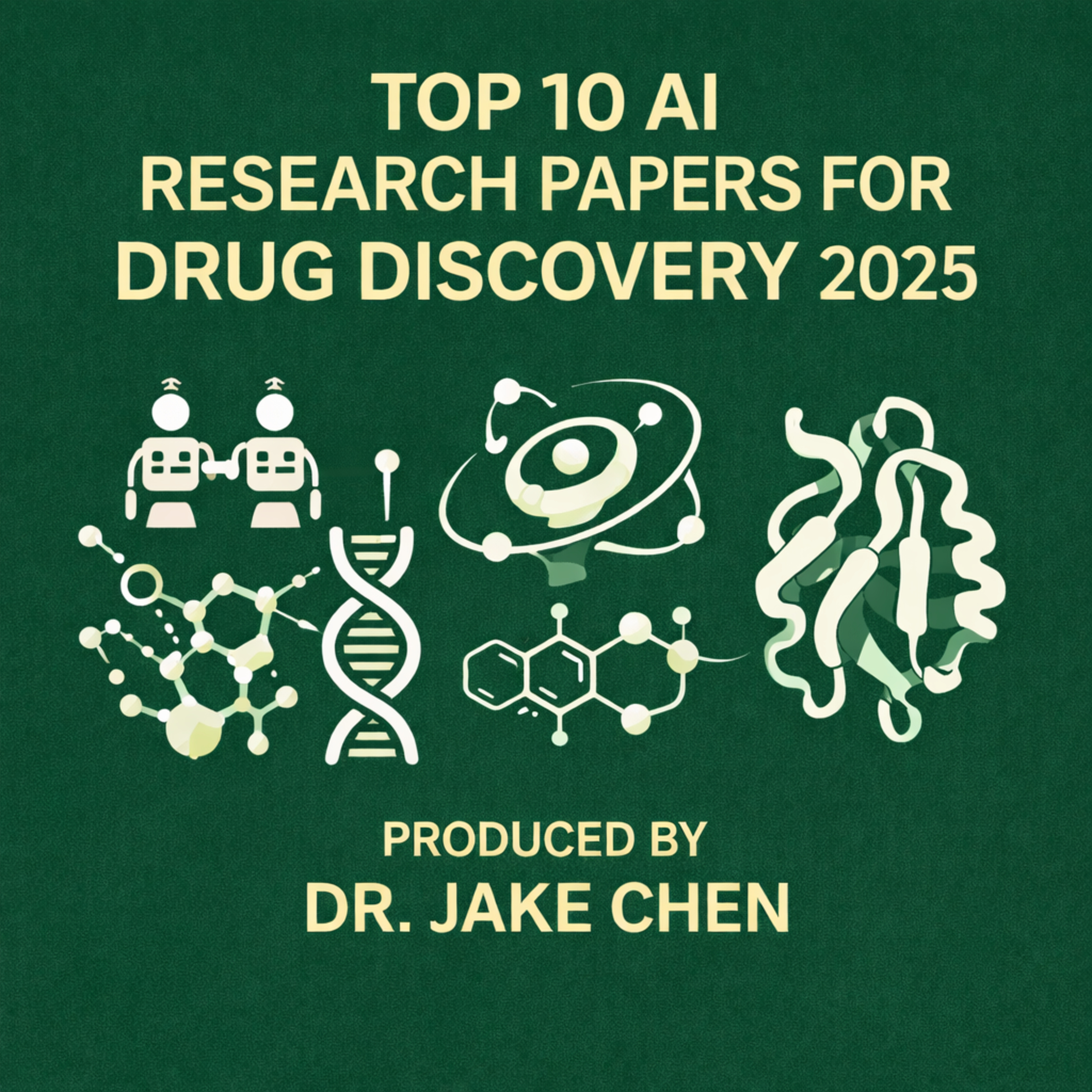 EP 46
EP 46
Top Ten AI Research Papers in 2025
This episode discusses the top 10 most influential AI for drug discovery papers from 2025, highlighting paradigm shifts in autonomous agents, virtual cell revolution, chemical intelligence, and design proteins beyond nature. The papers represent fundamental changes in the field, accelerating everything, cutting costs, and unleashing synthetic creativity. The episode explores the trends that will dominate 2026 and the impact of AI on drug discovery.
AIDrug DiscoveryAutonomous AgentsVirtual Cell RevolutionChemical IntelligenceProtein Design
Key Concepts
Autonomous Agents
- AI systems planning, executing, and iterating on their own
- Examples include Cosmos, Lidia, and Gemini 2.5 Pro
- Autonomous agents are changing the way drug discovery is done
Virtual Cell Revolution
- Huge datasets and spatial models are making computational cell simulation a real thing
- Examples include X-Atlas dataset and Nicheformer model
- The virtual cell revolution could one day replace some animal testing
Chemical Intelligence
- LLMs are bringing linguistic reasoning to chemistry
- Chemical intelligence is allowing AI to suggest novel, valid compounds
- Examples include papers Hashtag 6 and Hashtag 10
Design Proteins Beyond Nature
- AI is creating entirely new functional proteins that evolution never made
- Examples include ESM3 and RF Diffusion 2
- Designing proteins beyond nature is accelerating protein engineering
Open Integration and Scalability
- Papers with open resources and code are becoming exponentially more valuable
- Open integration and scalability are crucial for the future of AI in drug discovery
- Examples include Exatlas dataset and Nishaformer model
Episode Summary
- check_circleThe top 10 papers were selected from over 250 sources based on three criteria: paradigm-shifting innovation, breakthrough resources and data sets, and methodological innovation.
- check_circleThe papers represent a shift from tools to autonomous agents, with AI systems planning, executing, and iterating on their own.
- check_circleThe virtual cell revolution is supported by huge datasets and spatial models, making computational cell simulation a real thing.
- check_circleChemical intelligence is rising, with LLMs bringing linguistic reasoning to chemistry and suggesting novel, valid compounds.
- check_circleAI is designing proteins beyond nature, creating entirely new functional ones that evolution never made.
- check_circleThe focus for 2026 is on open integration, scalability, and reproducibility, with papers with open resources and code becoming exponentially more valuable.
- check_circleThe autonomous system Cosmos can compress six months of human research into a single 12-hour run, raising questions about the regulatory and validation systems' ability to adapt to this pace.
Full Transcript
Discussion
Join the discussion — sign in to leave a comment.
Log in to comment