arrow_backAll episodes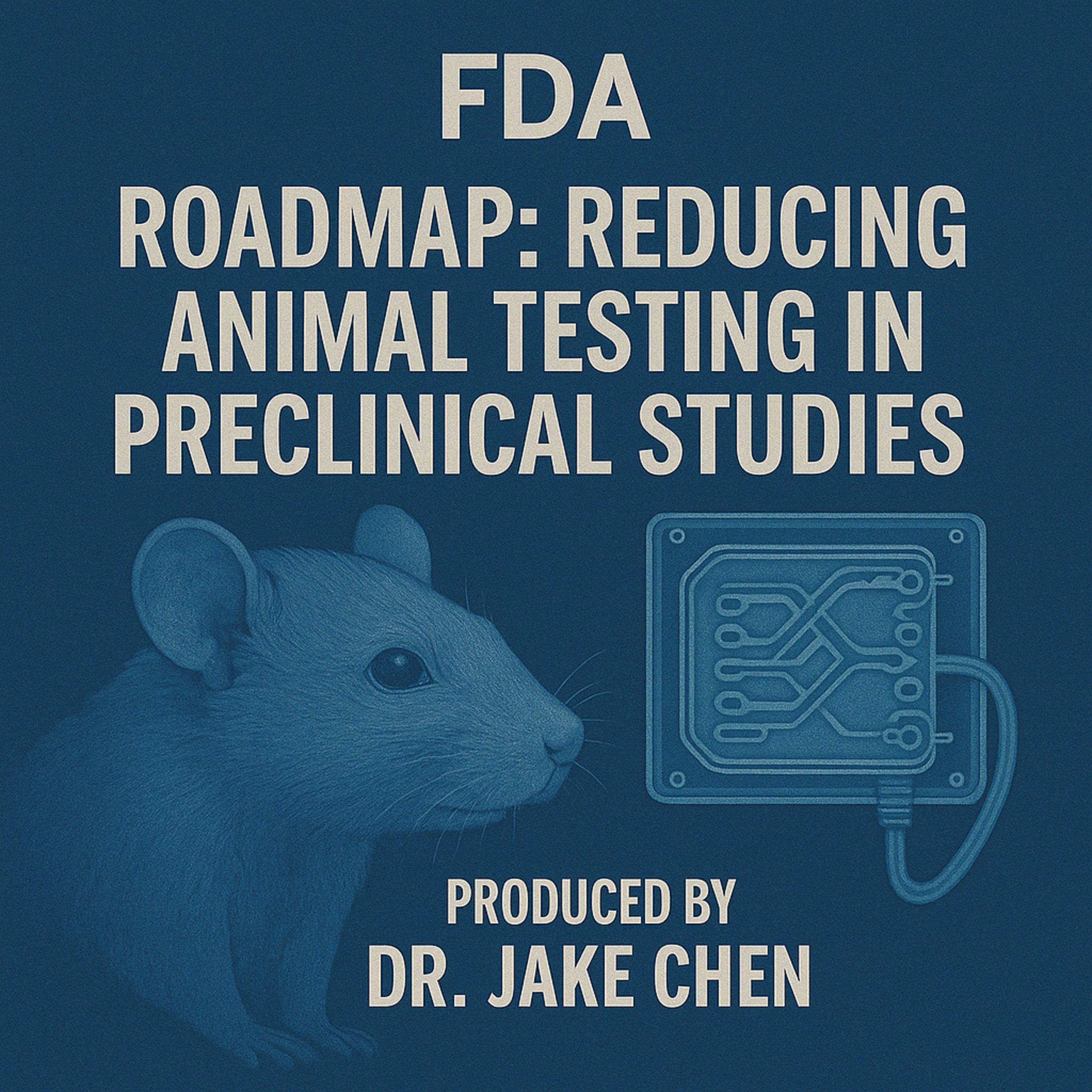 EP 7
EP 7
FDA Roadmap: Reducing Animal Testing in Preclinical Studies
The FDA proposes a roadmap to reduce animal testing in preclinical studies, aiming to improve drug development efficiency and accuracy. This episode discusses the limitations of traditional animal testing and the potential of new approach methodologies (NAMs) like in vitro human-based systems and in silico modeling. The FDA's plan to implement NAMs and the challenges ahead are also explored.
FDAanimal testingpreclinical studiesnew approach methodologiesin vitro human-based systemsin silico modeling
Key Concepts
New Approach Methodologies (NAMs)
- In vitro human-based systems, such as organoids and organs on chips
- In silico modeling, including computational modeling and AI
- Ex vivo human tissue testing
- High-throughput cell-based screening
- Microdosing in human volunteers
In Vitro Human-Based Systems
- Organoids: mini organs grown in a dish
- Organs on chips: microfluidic chips with human cells
- Reconstructed human skin models
In Silico Modeling
- Computational modeling, including PBPK modeling
- AI and machine learning for predicting toxicity and efficacy
- Quantitative systems pharmacology (QSP) models
FDA Implementation Plan
- Encouraging parallel submissions of NAM data
- Developing a database of toxicity data
- Reducing animal testing durations for MABs and other drugs
- Tracking progress and validating NAMs
Challenges and Hurdles
- Gap analysis: identifying key safety questions for different drug types
- NAM development: improving organ models and expanding toxicity databases
- Standardization and reproducibility: ensuring consistent results across labs
Episode Summary
- check_circleThe FDA proposes a roadmap to reduce animal testing in preclinical studies
- check_circleTraditional animal testing has limitations, with over 90% of drugs failing in human trials
- check_circleNew approach methodologies (NAMs) like in vitro human-based systems and in silico modeling offer potential alternatives
- check_circleThe FDA plans to implement NAMs, starting with monoclonal antibodies (MABs)
- check_circleNAMs could reduce animal testing, improve accuracy, and decrease costs
- check_circleThe FDA will track progress, validate NAMs, and update regulations to incorporate NAMs
- check_circleThe long-term goal is to make animal studies the exception, not the rule, and replace them with NAMs
- check_circleScientific and technical hurdles need to be addressed, including gap analysis, NAM development, and standardization
Full Transcript
Discussion
Join the discussion — sign in to leave a comment.
Log in to comment