arrow_backAll episodes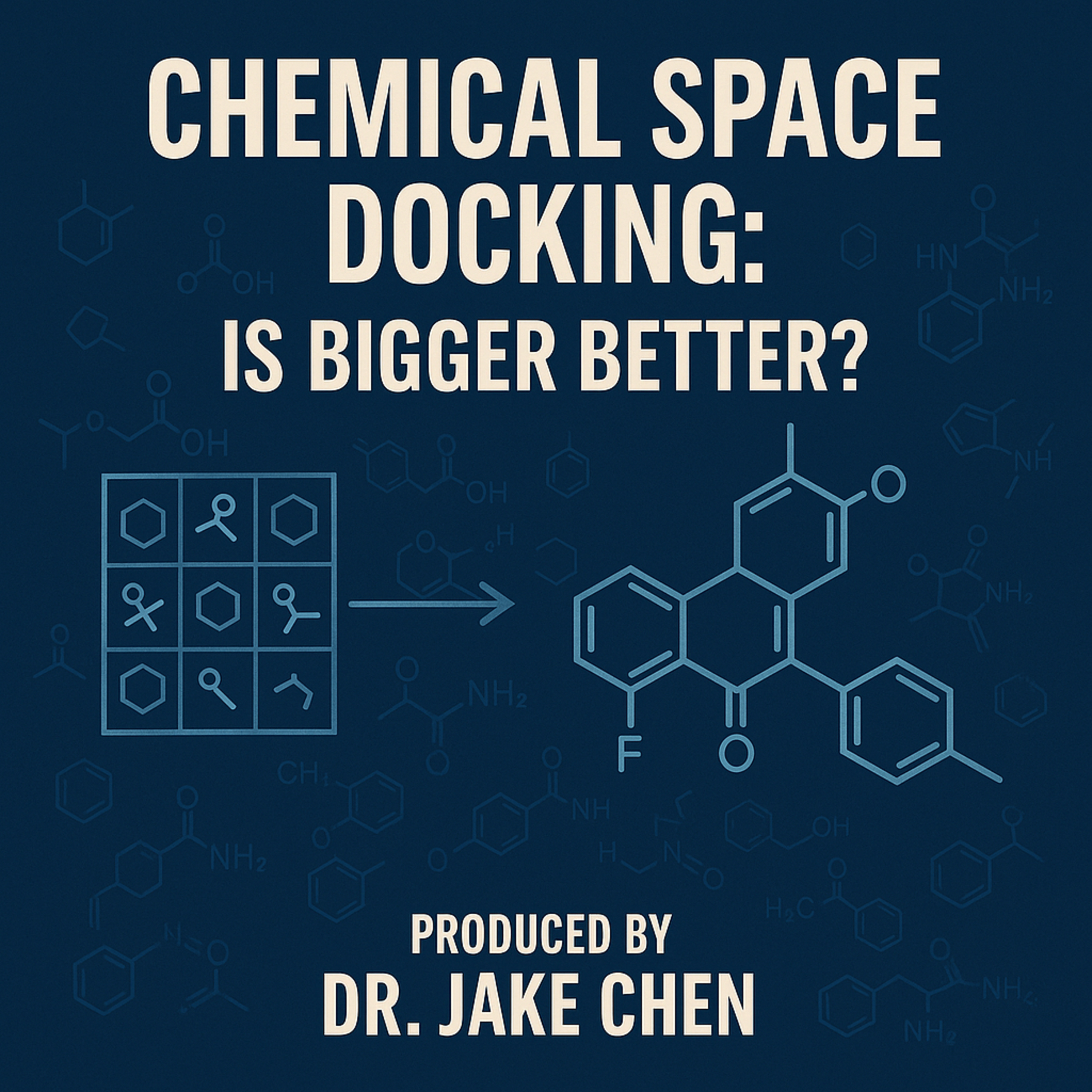 EP 13
EP 13
Chemical Space Docking: Is Bigger Better?
This episode explores the concept of chemical space docking, a strategy used in drug discovery to navigate the vast theoretical space of potential drug-like molecules. The discussion delves into the challenges and advantages of larger virtual libraries in finding better drug candidates. The episode also touches on the importance of intelligent filtering and the potential for unforeseen discoveries in the mostly unexplored molecular realms.
chemical space dockingdrug discoveryvirtual librariesfragment dockingtargeted enumeration
Key Concepts
Chemical Space
- Refers to the theoretical collection of drug-like molecules
- Estimated to be around 10^60 to 10^63 molecules
- Can be curated into specific collections, such as chemical spaces with capital letters
Chemical Space Docking
- A strategy used to predict which molecules might bind well to a specific target protein
- Involves docking fragments first, then intelligently combining them to form larger molecules
- Uses software such as FlexX and HYDE to predict binding affinity and estimate ligand lipophilicity efficiency
Fragment Docking
- Involves docking smaller fragments of molecules instead of fully formed molecules
- Helps to identify promising starting points for building larger molecules
- Uses extendable atom concepts to flag fragments with good potential for growth
Targeted Enumeration
- Involves generating a smaller, manageable list of potential full molecules
- Uses the best fitting fragments and combines them based on reaction rules
- Helps to pinpoint promising candidates without testing billions of molecules
Virtual Libraries
- Can be larger and more diverse than traditional compound libraries
- Offer advantages in finding better drug candidates, but also pose challenges such as false positives
- Require robust methods and filters to manage and weed out false positives effectively
Episode Summary
- check_circleChemical space docking is a strategy used to navigate the vast theoretical space of potential drug-like molecules.
- check_circleThe approach uses building blocks and reaction rules to efficiently search for promising candidates.
- check_circleLarger virtual libraries can offer advantages in finding better drug candidates, but also pose challenges such as false positives.
- check_circleIntelligent filtering and robust methods are necessary to manage and weed out false positives effectively.
- check_circleThe use of fragment docking and targeted enumeration can help pinpoint promising candidates without testing billions of molecules.
- check_circleThe evidence suggests that larger virtual libraries generally do offer real advantages in finding better drug candidates faster.
- check_circleThe balance between the size of the space, data management, and search algorithm intelligence is crucial for unlocking future breakthroughs.
Full Transcript
Discussion
Join the discussion — sign in to leave a comment.
Log in to comment