arrow_backAll episodes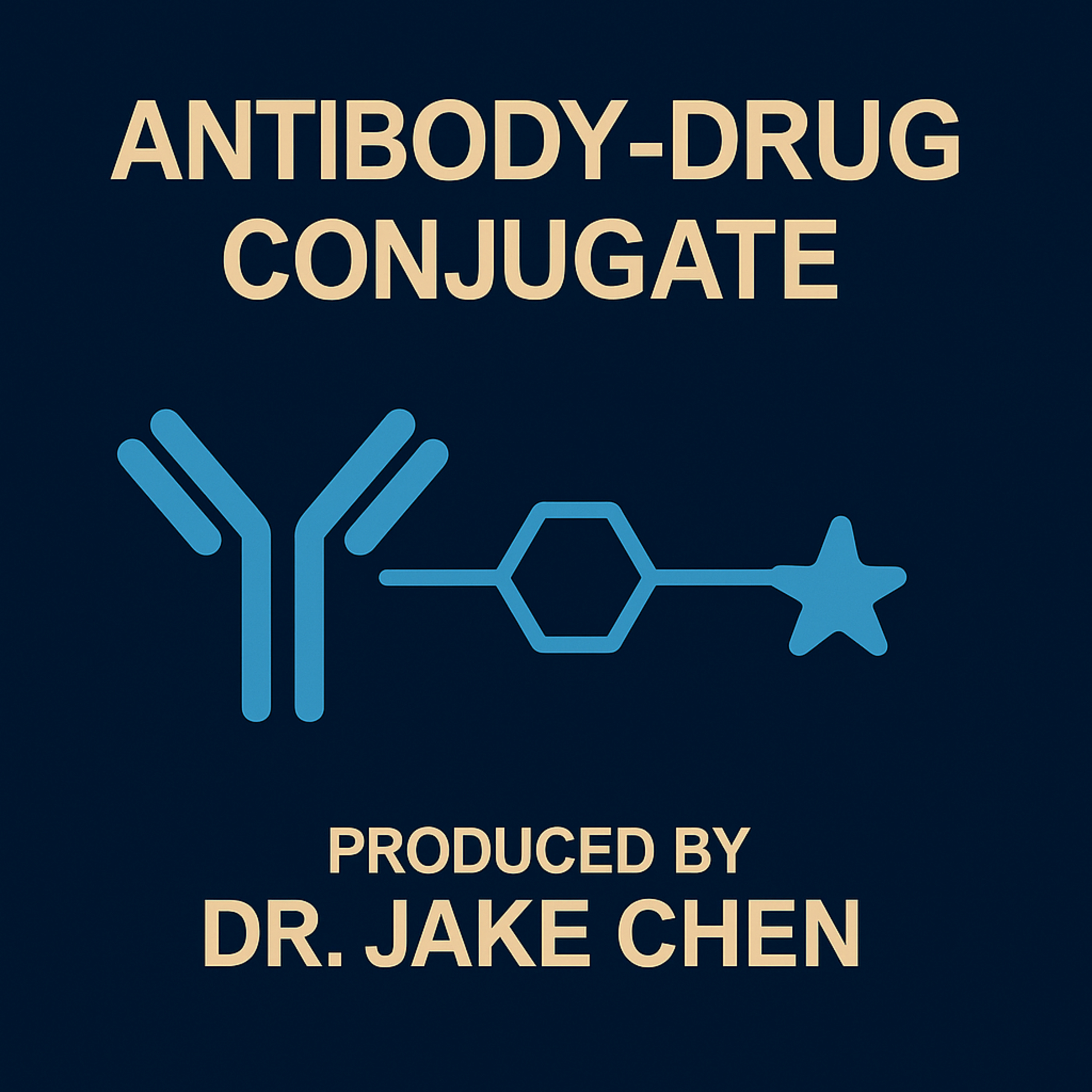 EP 43
EP 43
Antibody-Drug Conjugate
Antibody-Drug Conjugates (ADCs) are a type of cancer treatment that combines a monoclonal antibody with a cytotoxic payload. This episode explores the history, mechanics, and cutting-edge technology behind ADCs, including their potential to revolutionize oncology. With 21 approved ADCs worldwide and a market projected to hit over $30 billion by 2028, ADCs are a rapidly growing field. This episode delves into the complexities of ADC design, including the balancing act between stability and release, and the role of AI in accelerating ADC development.
Antibody-Drug ConjugateCancer TreatmentOncologyAI in Medicine
Key Concepts
Antibody-Drug Conjugate (ADC) Design
- ADCs consist of three parts: a monoclonal antibody, a cytotoxic payload, and a chemical linker.
- The antibody is engineered to target a specific protein on cancer cells.
- The payload is designed to kill the cancer cell.
- The linker must be stable in the bloodstream but release the payload once inside the cancer cell.
Linker Technology
- Linkers can be cleavable or non-cleavable.
- Cleavable linkers are designed to break apart in response to specific triggers, such as enzymes or acidic environments.
- Non-cleavable linkers are more stable but may not release the payload as effectively.
Payload Technology
- Payloads can be microtubule inhibitors, DNA-damaging agents, or topoisomerase I inhibitors.
- Each type of payload has its own mechanism of action and potential side effects.
Bystander Effect
- The bystander effect is a phenomenon where the payload can leak out of the targeted cell and kill neighboring cancer cells.
- This effect can be beneficial in killing cancer cells that are not directly targeted by the ADC.
AI in ADC Development
- AI can be used to design more effective and safer ADCs.
- AI can predict the structure and binding of antibodies, as well as the stability and toxicity of linkers and payloads.
Episode Summary
- check_circleThe concept of a 'magic bullet' in cancer treatment was first proposed by Paul Ehrlich in 1907.
- check_circleAntibody-Drug Conjugates (ADCs) are a type of cancer treatment that combines a monoclonal antibody with a cytotoxic payload.
- check_circleADCs consist of three parts: a monoclonal antibody, a cytotoxic payload, and a chemical linker.
- check_circleThe antibody is engineered to target a specific protein on cancer cells, while the payload is designed to kill the cell.
- check_circleThe linker is a critical component that must be stable in the bloodstream but release the payload once inside the cancer cell.
- check_circleThe bystander effect is a phenomenon where the payload can leak out of the targeted cell and kill neighboring cancer cells.
- check_circleADCs have a long history of development, with the first attempts dating back to the 1950s and 1960s.
- check_circleThe first approved ADC, Mylotarg, was approved in 2000 but withdrawn in 2010 due to toxicity issues.
- check_circleModern ADCs have improved linkers and payloads, leading to increased efficacy and reduced toxicity.
- check_circleAI is playing a significant role in accelerating ADC development, with the potential to design more effective and safer ADCs.
- check_circleADCs are being explored for use in autoimmune diseases, such as rheumatoid arthritis and psoriasis.
Full Transcript
Discussion
Join the discussion — sign in to leave a comment.
Log in to comment