arrow_backAll episodes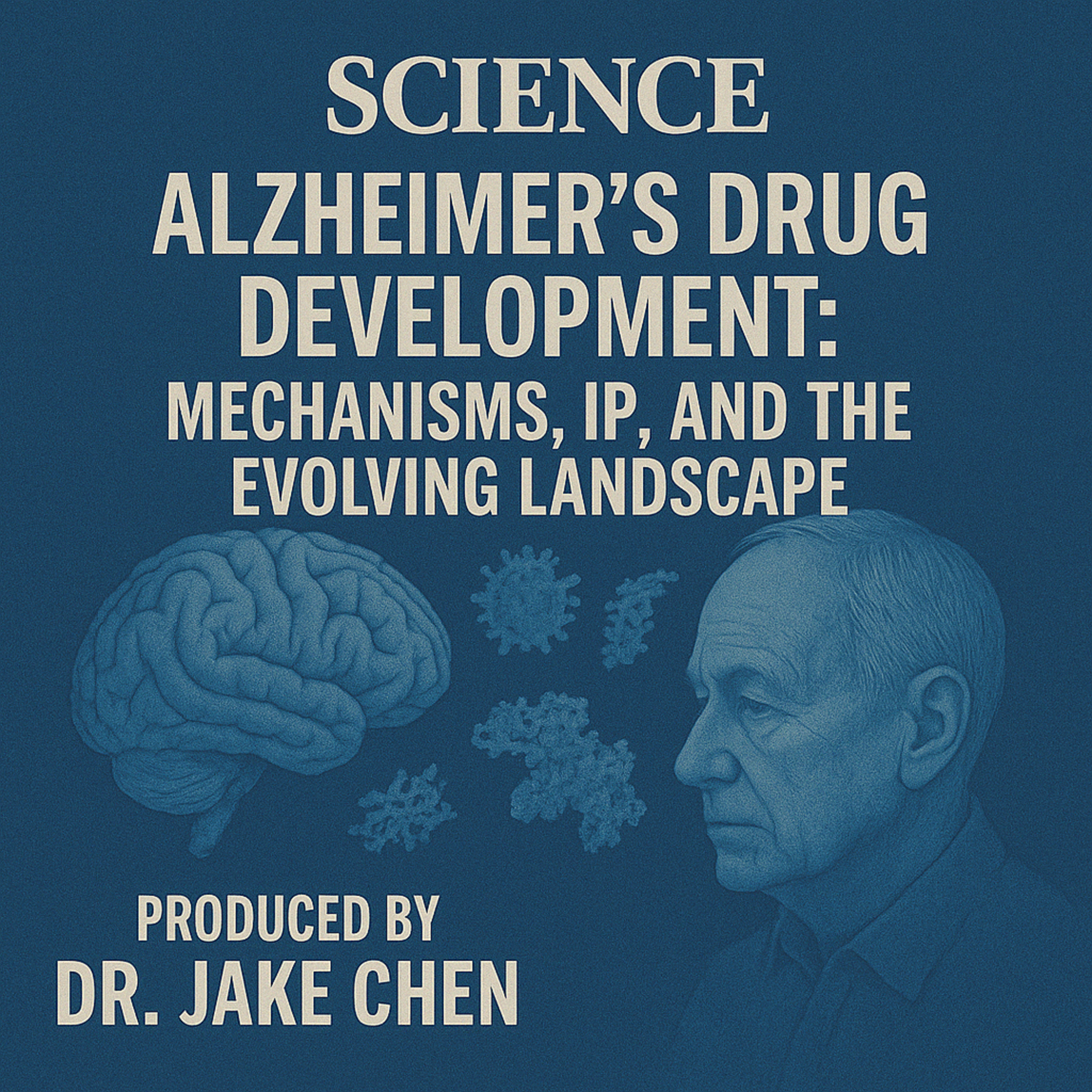 EP 4
EP 4
Alzheimer's Drug Development: Mechanisms, IP, and the Evolving Landscape
This episode explores the complex landscape of Alzheimer's drug development, including the science behind the disease, current treatments, and the challenges researchers face. Our expert guest discusses the role of intellectual property in driving innovation and the various approaches being explored to tackle this devastating disease.
Alzheimer's diseasedrug developmentintellectual propertydisease-modifying therapiescombination therapies
Key Concepts
Amyloid Plaques
- Amyloid plaques are sticky clumps of protein that build up outside neurons, disrupting communication and triggering inflammation.
- Amyloid beta antibodies are being developed to target and clear amyloid plaques from the brain.
Tau Tangles
- Tau tangles are twisted and tangled proteins that disrupt the internal transport system of neurons, leading to cell death.
- Tau-targeted therapies are being explored to address the tau tangles that contribute to Alzheimer's.
Disease-Modifying Therapies
- Disease-modifying therapies aim to target the root causes of Alzheimer's, such as amyloid plaques and tau tangles.
- Examples of disease-modifying therapies include amyloid beta antibodies and tau-targeted therapies.
Intellectual Property
- Intellectual property plays a crucial role in driving innovation in Alzheimer's drug development.
- Patents and licensing agreements protect investments in research and development, encouraging companies to invest in new therapies.
Combination Therapies
- Combination therapies use multiple drugs to target different aspects of Alzheimer's.
- Combination therapies may hold promise for the future of Alzheimer's treatment, offering a more comprehensive approach to addressing the disease.
Episode Summary
- check_circleAlzheimer's disease is a complex condition characterized by the accumulation of amyloid plaques and tau tangles in the brain, leading to cognitive decline and memory loss.
- check_circleThe preclinical phase of Alzheimer's can last for years or even decades, making early detection and diagnosis challenging.
- check_circleCurrent treatments for Alzheimer's are primarily symptomatic, but disease-modifying therapies are being developed to target the root causes of the disease.
- check_circleDisease-modifying therapies, such as amyloid beta antibodies, aim to reduce amyloid plaques and slow cognitive decline.
- check_circleTau-targeted therapies are also being explored to address the tau tangles that contribute to Alzheimer's.
- check_circleThe development of new drugs for Alzheimer's is a long and complex process, involving preclinical research, human trials, and regulatory approval.
- check_circleIntellectual property plays a crucial role in driving innovation in Alzheimer's drug development, with patents and licensing agreements protecting investments in research and development.
- check_circleCombination therapies, using multiple drugs to target different aspects of the disease, may hold promise for the future of Alzheimer's treatment.
- check_circleEarly detection and diagnosis are critical to slowing or preventing the progression of Alzheimer's, with advancements in biomarkers and diagnostic tools offering new hope.
Full Transcript
Discussion
Join the discussion — sign in to leave a comment.
Log in to comment