arrow_backAll episodes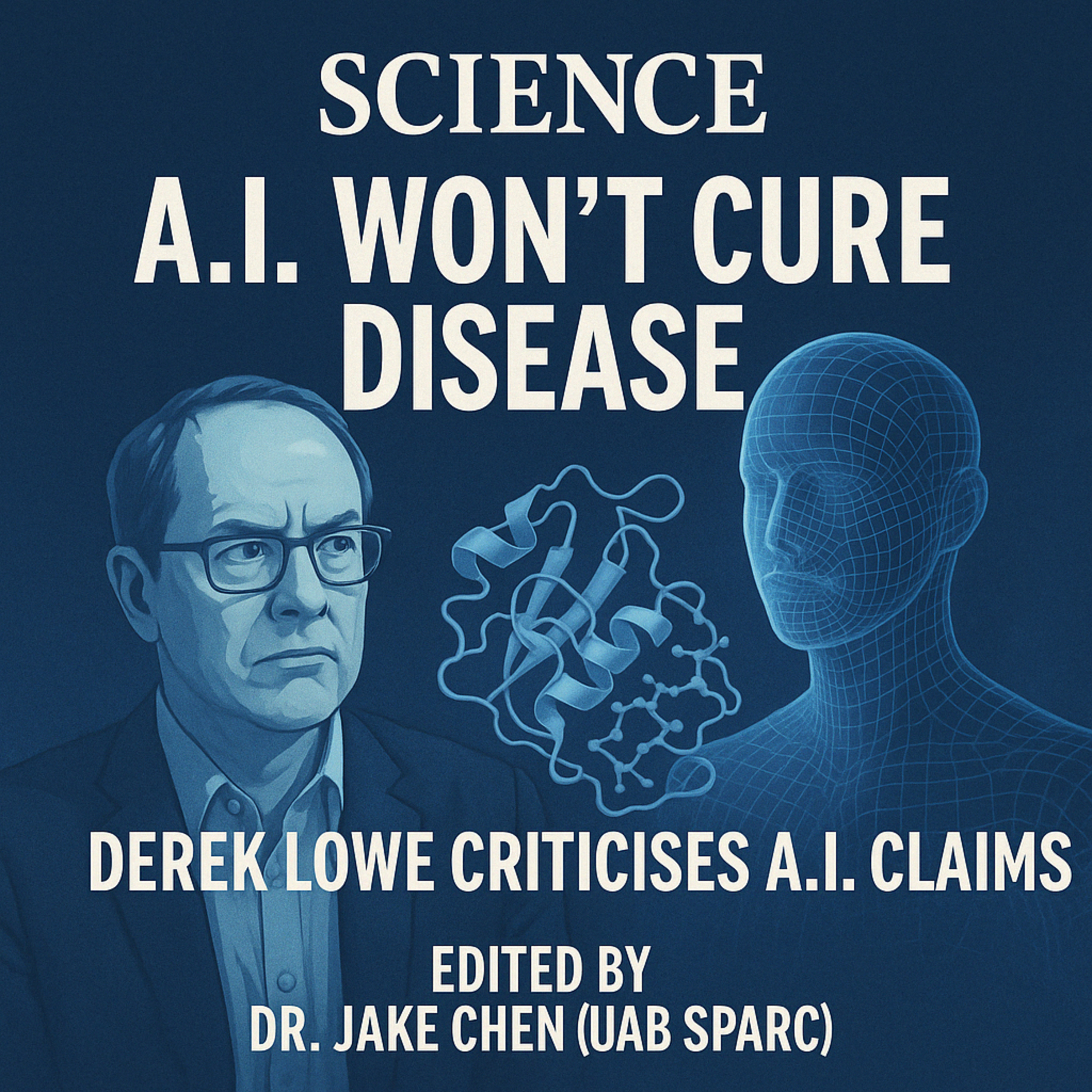 EP 6
EP 6
AI in Drug Discovery - Reality Check
The potential of AI in drug discovery is vast, but what are the real barriers to its success? This episode explores the excitement and caution surrounding AI's role in revolutionizing health and curing diseases. With commentary from Derek Lowe, we delve into the limitations of current AI technology and the importance of fundamental biological knowledge. From protein structures to the complexity of biology, we examine the tension between the incredible potential of AI and the daunting reality of what we still don't know.
AIDrug DiscoveryProtein StructuresThe Andy Grove FallacyLimitations of Current AI TechnologyPartnership between Humans and AIImportance of Fundamental Biological Knowledge
Key Concepts
Protein Structures
- Proteins are the workhorses of the cell, doing everything from nerve signals to immune response
- Understanding protein structures is critical for designing drugs to interact with them
- AlphaFold has been successful in predicting protein structures, with 200 million structures predicted in just one year
The Andy Grove Fallacy
- The assumption that drug discovery should progress neatly and predictably, like software development
- This fallacy ignores the complexity of biology and the limitations of current AI technology
- Lowe argues that biology is far messier than engineering silicon, and that AI is not a replacement for human-driven science
Limitations of Current AI Technology
- AI is fantastic at finding patterns in data, but it doesn't fundamentally create new biological knowledge
- AI can't answer crucial biological questions based on structure alone, such as which proteins are causing disease or which are druggable targets
- Lowe emphasizes that biology is much more than just proteins, and that our current knowledge base is inadequate to cure all disease in a decade
Partnership between Humans and AI
Episode Summary
- check_circleDemis Hassabis, CEO of Google DeepMind, suggests AI could bring about the end of disease within the next decade
- check_circleDeepMind's AI, AlphaFold, has been successful in predicting protein structures, with 200 million structures predicted in just one year
- check_circleDerek Lowe's commentary provides a counterweight to the excitement, highlighting the complexity of biology and the limitations of current AI technology
- check_circleLowe argues that biology is far messier than engineering silicon, and that AI is not a replacement for human-driven science
- check_circleThe Andy Grove fallacy assumes that drug discovery should progress neatly and predictably, like software development
- check_circleAI is fantastic at finding patterns in data, but it doesn't fundamentally create new biological knowledge
- check_circleAI can't answer crucial biological questions based on structure alone, such as which proteins are causing disease or which are druggable targets
- check_circleLowe emphasizes that biology is much more than just proteins, and that our current knowledge base is inadequate to cure all disease in a decade
- check_circleAI and ML are powerful tools for analyzing what we do know, but they can't invent what we don't know
- check_circleThe future of drug discovery looks like a partnership between humans and AI, with AI accelerating and analyzing data, and humans providing context and biological understanding
Full Transcript
Discussion
Join the discussion — sign in to leave a comment.
Log in to comment